An extensive study just released by Opportunity Insights at Harvard University is drawing significant attention to the impact of certain integration-oriented housing policies – specifically the concept of “moving to opportunity,” including a editorial in The New York Times, and a featured article in The Atlantic. The programs at the heart of study hold the promise of not only stabilizing low-income families in the short term but more importantly, according to the extensive long-term data presented, also result in surprisingly significant wealth building for the next generation. This post summarizes the attention-getting findings presented on February 2, 2026 by researchers Raj Chetty and Matthew Staiger at a Brookings Institution Seminar on the long-term outcomes of the multi-billion federal HOPE VI program (Housing Opportunities for People Everywhere). Could smaller scale, basic affordable housing, incorporated into established higher wealth communities, directly impact affect the families’ well-being 10, 15, or 20 years later? Results from the study are mixed, but the main findings were clear. While there was little improvement seen for adults moving from distressed situations to more stable and higher wealth areas, evidence across multiple decades and millions of observations show clear but strong positive results for their children.

The main take-away appears to be the clear importance of facilitating social connections of children across income groups in designing successful affordable housing development. In other words, lower income kids who connect with higher income kids in their shared neighborhoods do significantly better. The idea of ‘moving to opportunity’ works, at least for the next generation. At the broadest level, the results demonstrate that housing policy choice can make a dramatic and positive difference in economic outcomes.
Started in 1992, HOPE VI focused on the most distressed housing in the country – clusters of high-rise public housing towers or isolated public housing “islands” with high crime, high unemployment, and decrepit structures. At the time, the Federal Department of Housing and Urban Development provided funds to demolish or rehabilitate distressed housing. An example of the challenge faced by such neighborhoods in North Carolina can be found in this 2014 SOG CED Blog post about the experience of the City of Durham’s efforts, along with national non-profit The Community Builders, to revitalize the Few Gardens complex after winning a multi-million dollar HOPE VI award in 2000.
At the time, the HOPE VI program brought a new perspective to housing growth – that trying to help families while in distressed communities may not be a solution due to the barriers presented by the nature of the communities themselves, as well documented by Sociologist William Julius Wilson. Instead, if families could move out of the distressed areas to neighborhoods already economically established and stable, they may have a greater chance to improve their family’s economic wealth trajectory. In other words, the question HOPE VI proponents asked was the following: would moving lower wealth families into higher wealth communities in an integrated fashion provide an atmosphere that would facilitate the ability of lower- wealth families to gain longer-term economic security and success? The Hope VI project put this theory into practice by demolishing large scale public housing and integrating new public housing with smaller footprints into areas alongside higher market rate rentals or for-sale homes.

Did the families moving into these “better opportunity” communities have improved outcomes in the long run? Opportunity Insights tracked the economic progress of over one million public housing residents involved in HOPE VI from 1993 to 2019, using data including earnings of both adults and children, education, economic mobility, crime, and ultimately, cost-effectiveness of the program. The data are readily available and can be explored through the Opportunity Insights data website, found here.
The results indicate both failure and success. The researchers found when cities tried to surround larger scale distressed communities with higher wealth areas, there was no benefit to the distressed area residents. When the low-income families were actively integrated into the wealthier surrounding neighborhood, adults did not experience a change in their economic status, and the more affluent in the integrated neighborhoods also did not see a change, negatively or positively. However, economic gains for the children in the low-income families over time were dramatically better.
“Each year of childhood exposure to a revitalized public housing unit raised children’s earnings in adulthood by 2.8%. Those living there from birth earned 50% more over their lifetimes.” – Opportunity Insights
Chetty and his colleagues argue social interactions with different people were the reason. For example, children from lower income homes would socialize children from higher wealth families, marry into different social groups, and regularly interact with and develop friendships with more affluent families. The younger the children were when they moved to mixed-income, higher average wealth neighborhoods, the larger the gains for the children were over time, and the stronger the causal link between place and economic outcomes. In a slight challenge to the Opportunity Insights work, other panelists noted the key was perhaps not exactly the place where you sleep, but more importantly who you interact with when you are awake – that is, the key isn’t creating mixed income neighborhoods per se, but being integrating into a mixed income community creates opportunities to be in the right place and time to make vital, material social connections.
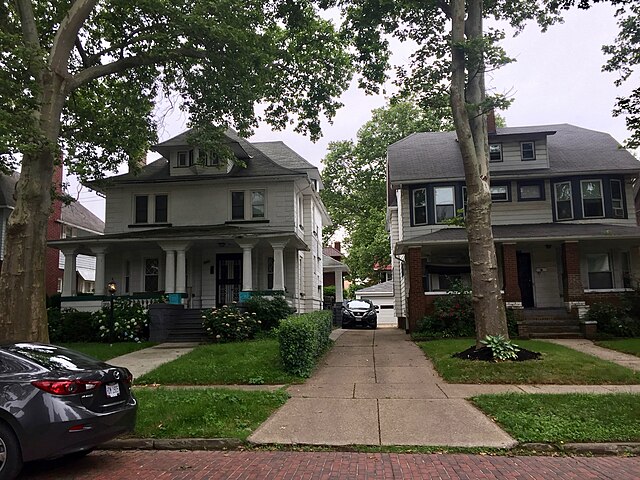
The HOPE VI program was not without its critics. The uncomfortable side effect of this major shift at the time was that the smaller mixed communities could not accommodate the majority of those who lost housing in the process, those who were able to move to the ”places of opportunity” may have been the ones most able to do so, and some social aspects of community which had developed within the distressed projects were lost. Federal funding gradually declined, ceasing in 2012. The panelists made a specific effort to point out that in HOPE VI communities where housing was improved, but the surrounding areas remained deeply distressed, did not see similar gains. The social connection aspect was missing.
Former U.S. Housing and Urban Development Secretary Henry Cisneros participated in the Brookings discussion, emphasizing the important role local governments will play in using the findings from this study and the related data. He pointed out local officials understand their community’s context and can often best consider how policies can be applied to local housing initiatives. Other panelists pointed out local governments need to evaluate whether this type of approach is an appropriate fit for their jurisdiction. If the economy is weak in the surrounding community and region, this approach may not work. One panelist suggested “eds and meds” communities (those with institutions of higher education and health services and hospitals) – could serve as good venues for this model. In addition, there was significant discussion of the importance of local transportation, specifically buses, that facilitate movement to and from work and housing, allowing more mixed income housing overall. Transit lines used in Charlotte were specifically mentioned by Cisneros.
Overall, the Brookings panel of experts emphasized the basic message that while different strategies can be debated, there is now clear agreement significant improvement in economic stability and growth for the next generation can be promoted through mixed income housing integration that allow social connections to develop. However, it is also clear the impact takes a generation. Unfortunately, adults are not the winners here, but they can provide the environment where the kids are. According to this research, social connections and integration of different people into different social networks are the critical piece.